For most ADUs and garage conversions in Los Angeles, the right HVAC system is a ductless mini-split heat pump: one system that heats and cools, needs no ductwork, and gives the unit its own controls. The details that actually matter are sizing it correctly for a small, tight space, choosing single-zone or multi-zone based on the floor plan, placing the outdoor unit where it works for airflow, noise and setbacks, and making sure the electrical, condensate and Title 24 paperwork are handled so the ADU passes inspection.
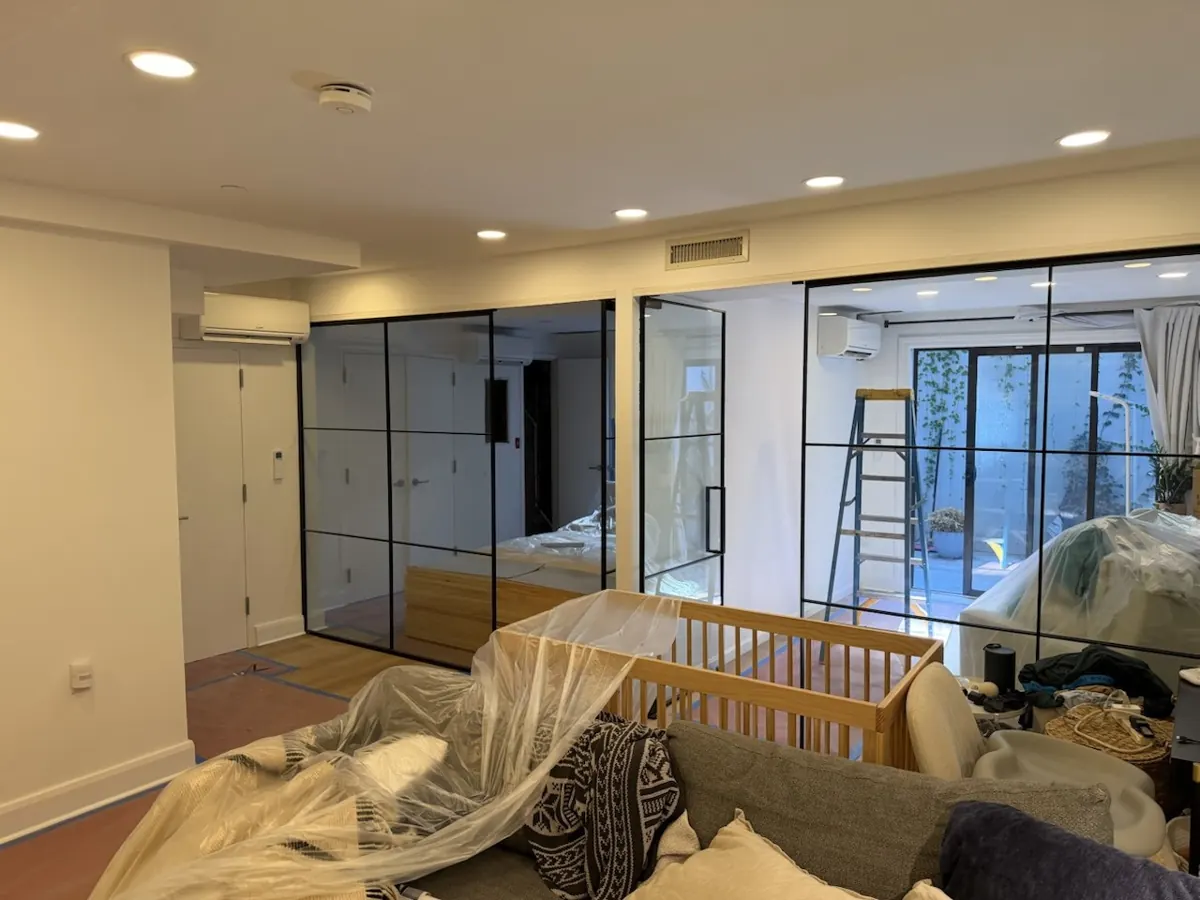
California's ADU laws have made backyard units and garage conversions common from Van Nuys to Pasadena. Here's what to plan for, ideally before the walls close up.
Why Mini Splits Are the Default for LA ADUs
An ADU is a small, separate living space, often a rental or a home for relatives. That points toward a dedicated system for a few practical reasons:
- No ductwork needed. Ductless heads mount directly in the rooms, saving ceiling height and attic space that are often tight in ADUs.
- Heating and cooling in one. Nearly all mini splits are heat pumps, so there's no need for a gas line or furnace in the ADU.
- Independent control. The ADU occupant controls their own comfort without touching the main house thermostat.
- Efficiency at small loads. Inverter compressors slow down to match the modest load of a small, well-insulated unit instead of cycling on and off.
Tying an ADU into the main house's central system is rarely a good idea. The main system usually has no capacity to spare, a long duct run across a yard performs poorly, and rental units generally need separate controls. For a broader comparison, see our guide to mini split vs central air in Los Angeles.
Sizing a Mini Split for an ADU
The most common mistake we see in ADUs is oversizing. New construction under current California energy code is far better insulated and sealed than the 1950s house in front of it, so the heating and cooling load per square foot is much lower. A unit picked from a square-footage chart can be too big.
An oversized mini split short-cycles, does a poor job of removing humidity, and can leave the space feeling clammy even though it's cool. The right approach is a load calculation (Manual J style) that accounts for:
- Wall, ceiling and floor insulation levels
- Window size, glass type and orientation, especially west-facing glass in the Valley
- Ceiling height and any vaulted areas
- Whether it's a detached unit, attached unit or garage conversion with a slab floor
- Expected occupancy and kitchen heat
- Local climate: a Woodland Hills or Van Nuys ADU sees far hotter summers than one near the coast
Garage conversions need extra attention
Converted garages often start with an uninsulated slab, a large door opening that becomes a wall and window, and sometimes a low or vaulted roof. How well the conversion is insulated and sealed has a big effect on the size of system you need, so get the HVAC conversation going while the insulation plan is being set.
Single-Zone vs Multi-Zone for ADUs
| ADU layout | Typical approach | Notes |
|---|---|---|
| Studio / open plan | Single-zone wall head | Simplest and most efficient; place the head for good air throw across the space |
| One bedroom with a door | Two-zone system, or single-zone plus careful layout | A closed bedroom door can block airflow from a living-room head |
| Two bedrooms | Multi-zone (one head per main room) | Each room gets its own control |
| Any layout, no visible heads wanted | Concealed ducted mini-split unit | Hides in a soffit or ceiling with short duct runs to each room |
| Bathroom | Usually covered by adjacent zone plus exhaust fan | Ventilation code applies separately |
One caution with multi-zone systems in small ADUs: if each indoor head is tiny and the outdoor unit is large, the system can struggle to run efficiently when only one room is calling. A good design matches the outdoor unit to the real combined load.
Want a pro to take a look?
$55 service call with code LA55 — inspection, diagnosis and a clear price before any work. Open 7 days · 8 AM – 10 PM.
Title 24 and Energy Compliance for ADUs
California's Title 24 Part 6 energy code applies to ADUs. A new detached ADU, or a garage converted into conditioned living space, is generally treated as new conditioned space, so energy compliance documentation is usually part of the plan submittal. That documentation covers insulation, windows, water heating and the HVAC system's efficiency.
Depending on the system type and scope, HERS verification may be required, which means a third-party rater tests certain items such as refrigerant charge or airflow and the results are registered before final sign-off. Requirements vary with the compliance approach your designer uses, so coordinate with your architect or energy consultant early. Our guide to HVAC permits and Title 24 explains HERS testing in more detail.
Plan the HVAC before plan check. The equipment you specify in your Title 24 documents should match what actually gets installed. Swapping in a different system late in construction can mean revised paperwork and delays at final inspection.
Permits: LADBS and Other City Departments
In the City of Los Angeles, which includes Sherman Oaks, Studio City, Encino, Van Nuys, North Hollywood and Hollywood, ADUs are permitted through LADBS, and the HVAC is part of what gets reviewed and inspected. Burbank, Glendale, Pasadena, Beverly Hills and West Hollywood each run their own building departments with their own ADU processes and checklists.
If you're adding a mini split to an ADU that's already finished, or replacing an existing system, you'll generally still need a mechanical permit, and possibly an electrical permit. Check with your city's building department for the exact requirements, and don't let anyone talk you into skipping it; unpermitted work tends to surface later at the worst time.
Where to Put the Outdoor Unit
ADUs often sit close to property lines, so outdoor unit placement deserves real thought.
Setbacks and local rules
Rules about mechanical equipment in side and rear setbacks vary by city, and some cities have specific requirements for where condensers can go. Confirm with your building department before you pour a pad or mount a bracket. HOA properties may have additional rules.
Noise
Modern inverter outdoor units are generally quiet, but in a tight side yard sound bounces off walls and fences. Keep the unit away from your bedroom windows, the ADU's bedroom windows and your neighbor's windows. Local noise ordinances apply, so a considerate placement is also the safe one.
Airflow and service access
- Leave clearance around the coil per the manufacturer's instructions.
- Avoid tucking the unit under a low overhang or into a corner where hot discharge air recirculates.
- Make sure a technician can reach it for maintenance without removing fencing.
- Wall brackets save ground space but can transmit vibration; ground pads are often better on wood-framed walls.
Line-set route
Shorter, cleaner refrigerant line routes are better for performance and appearance. Painted line-set covers keep the exterior tidy. Planning penetrations before stucco or siding goes on avoids patching later.
Electrical Requirements
A mini split needs a dedicated circuit sized to the outdoor unit's specifications, and a service disconnect near the outdoor unit. For ADUs, the bigger question is power supply: is the ADU fed from a subpanel off the main house, or does it have its own meter? Either way, your electrical plan should account for the mini split along with the ADU's kitchen, water heater, laundry and any EV charging.
Older main houses with small panels sometimes need a panel upgrade to support an ADU. That's an electrical and utility question that should be settled during design, not discovered on install day.
Condensate Drainage
In cooling mode, every indoor head produces water that has to go somewhere. Options include:
- Gravity drain through the wall to the exterior, the simplest choice for heads on exterior walls
- Condensate pump when the head is on an interior wall or gravity won't work; it needs power and occasional cleaning
- Routing to an approved location rather than dripping on a walkway, a neighbor's property or a foundation
Heat pump outdoor units also produce water during defrost in winter, so place the unit where that won't create a slippery or messy spot.
Heating, Ventilation and Air Quality in a Tight ADU
Because mini splits are heat pumps, the same system that cools the ADU on a July afternoon heats it on a chilly Valley morning, with no gas line, flue or furnace closet required. That frees up space and simplifies the build.
Tight construction also means fresh air doesn't sneak in through gaps the way it does in an older house. Bathroom and kitchen exhaust fans, and any whole-unit ventilation your plans call for, matter more than people expect. A mini split recirculates and filters room air, but it doesn't bring in outdoor air on its own.
Keep the indoor head filters clean, especially after wildfire smoke events like the January 2025 fires, when filters load up quickly. Washable mini-split filters take a few minutes to rinse, and a periodic professional cleaning of the indoor coil and blower keeps the unit quiet and efficient. Our wildfire smoke and indoor air guide has more on protecting indoor air during smoke events.
ADU HVAC Planning Checklist
- Load calculation done for the actual insulation, windows and orientation
- Single-zone, multi-zone or concealed ducted chosen to match the floor plan
- Equipment matches the Title 24 documents
- Outdoor unit location confirmed against setbacks, noise and service access
- Dedicated circuit and disconnect included in the electrical plan
- Condensate route planned for each indoor head
- Wall penetrations and line-set route set before exterior finish
- Mechanical permit and inspections scheduled
How Back2Cool Handles ADU HVAC
We install single and multi-zone ductless mini splits and heat pumps for homeowners, landlords and property managers, and ADUs are a natural fit for that work.
- Sized right: every system gets a Manual J style load calculation.
- Paperwork handled: we pull the permit, handle Title 24 testing and file utility rebate paperwork.
- Exact model numbers on a written quote before work starts, so it matches your plans.
- Full scope: a recent 5-zone Mitsubishi mini split with a branch box included all indoor units, the outdoor unit, refrigerant piping, electrical, condensate drains and full startup and testing in about two days.
- Clean site: floors covered, site cleaned daily.
Our lead tech has completed specialized training courses with Mitsubishi Electric, Daikin and Fujitsu, and we also repair existing mini splits.
"Back2Cool did a great job repairing my mini split. They found the issue quickly, explained what was wrong, and got everything working again the same day!! Professional, friendly, and reasonably priced!!!! Love their service ❤️❤️❤️ P.S.: Thank you for the gift!!!!"
Max A. · Thumbtack
Planning an ADU in Van Nuys, North Hollywood, Encino or anywhere in our service area? Call (626) 635-4095 or get in touch for a quote.