The short answer: in the San Fernando Valley, get your central air conditioner professionally serviced once a year, ideally in spring, before the first heat wave. If you have a heat pump or a ductless mini split that also heats your home in winter, plan on two visits a year, one in spring and one in fall. In between, check your air filter every month during summer, Santa Ana wind season and any wildfire smoke event.
That schedule is stricter than what you will read in generic national advice, and there is a reason for it. Valley neighborhoods like Van Nuys, Encino, North Hollywood and Woodland Hills run much hotter than the coast. Woodland Hills hit 121°F on September 6, 2020, and triple-digit days are a normal part of summer here. Add dust, Santa Ana winds and smoke, and your AC simply works harder and longer than one in Santa Monica. Below is the full AC maintenance checklist, split into what you can safely do yourself and what should be left to a technician.
How often to service your AC in the San Fernando Valley
An air conditioner is rated and designed to run efficiently when its coils are clean, its airflow is right and its electrical parts are healthy. Every hour of runtime chips away at that. Long, hot Valley summers and heat waves that often hit in August, September and even October add a lot of hours, which is why annual service matters more here than in milder climates.
| Equipment | Professional service | Homeowner checks |
|---|---|---|
| Central AC (cooling only) with gas furnace | Once a year, in spring; furnace check in fall | Filter monthly in summer; outdoor unit clear and rinsed |
| Central heat pump | Twice a year, spring and fall | Filter monthly in peak seasons; outdoor unit clear year-round |
| Ductless mini split (heating and cooling) | Once or twice a year depending on use | Wash indoor filters regularly; watch for drips and odors |
| Rooftop package unit | Once or twice a year | Leave roof work to a pro; keep the filter changed |
| Window, wall or portable AC | As needed | Clean filter often; keep the drain and vents clear |
If your system is newer, runs only a few weeks a year and lives in a shaded spot, you have a bit more slack. If it is older, cools a whole house in the east Valley all summer, or sits on a dusty roof, treat the yearly visit as non-negotiable.
The best time to schedule AC maintenance: spring, before the heat
The ideal window for AC maintenance in the San Fernando Valley is spring, roughly March through May. There are three practical reasons:
- Weak parts fail under load. A tired capacitor or a pitted contactor can limp along in mild weather and then quit on the first 100-degree afternoon. Spring service catches it while it is a quick part swap, not an emergency.
- Scheduling is easier. Once a heat wave hits, every HVAC company in LA gets flooded with no-cool calls. Spring appointments are simply easier to book.
- You start the season efficient. Clean coils and correct airflow mean lower runtime when electricity costs the most. If you are on a time-of-use plan, see our guide to lowering your summer cooling bill under LADWP and SCE rates.
Heat pump owners should book the second visit in fall, before the cold nights of December and January, so the heating side, defrost operation and reversing valve get checked too.
DIY AC maintenance checklist: what homeowners can safely do
A lot of good AC maintenance is simple and costs almost nothing. These are the tasks that make the biggest difference between professional visits.
1. Filters: the Valley's most important habit
A clogged filter starves the system of airflow. That makes the indoor coil run too cold, can freeze it into a block of ice, and forces the blower motor to strain. In the Valley, filters load up faster than you might expect because of dust, pollen, Santa Ana wind days and wildfire smoke.
- Check the filter monthly from late spring through fall, and any time smoke is in the air.
- Replace it when it looks gray or you cannot easily see light through it.
- Use the size printed on the old filter frame, and make sure the airflow arrow points toward the blower.
- Higher-efficiency (higher MERV) filters catch smaller particles but can restrict airflow in some systems. Ask your technician what your blower and return can handle. Our guide to ducts and wildfire smoke covers filter choices in more detail.
2. Rinse the outdoor condenser coil
The outdoor unit gets rid of the heat pulled out of your house. When its coil is caked with dust, cottonwood fluff, leaves or ash, it cannot shed heat, pressures climb and efficiency drops. A gentle rinse once or twice a season helps.
- Turn off power at the outdoor disconnect and at the breaker.
- Clear leaves and debris from the top and around the base.
- Rinse with a garden hose on a gentle setting, spraying through the fins from the inside toward the outside when you can reach, otherwise straight on.
- Never use a pressure washer or a stiff brush. Bent fins block airflow.
3. Keep clearances around the outdoor unit
Valley yards love bougainvillea, rosemary and tall hedges, and all of them like to crowd AC units. Keep roughly a couple of feet of open space around the sides and plenty of open air above. Do not stack patio furniture, trash bins or pool equipment against it, and do not build a tight fence box around it to hide it. A condenser that breathes its own hot air back in works much harder.
4. Check the condensate line
Your AC pulls moisture out of the air and drains it through a small pipe. When that line clogs with algae and sludge, water can back up into a drain pan, trip a safety float switch and shut the system off, or overflow into a ceiling or closet.
- Find where the line ends outside and make sure it drips during operation.
- If there is an access cap near the indoor unit, a cup of plain water poured in at the start of the season helps confirm it flows freely.
- Water stains around the indoor unit or a system that shuts off on hot days are reasons to call for service.
5. Thermostat check
Replace thermostat batteries if it uses them, confirm the schedule still matches your life, and make sure it is not mounted where afternoon sun or a lamp hits it. A thermostat that reads warm makes the AC run long for no reason.
6. Open registers and clear returns
Closing supply registers in unused rooms does not save energy on most central systems. It raises duct pressure and can make leaks worse. Keep supplies open and make sure furniture and rugs are not blocking the return grille.
Safety first: always shut off power at both the outdoor disconnect and the breaker before touching the outdoor unit. Do not open electrical panels, handle capacitors (they can hold a charge after power is off) or connect anything to the refrigerant ports. Refrigerant work requires EPA-qualified technicians and the proper tools, and it is not a DIY job.
Want a pro to take a look?
$55 service call with code LA55 — inspection, diagnosis and a clear price before any work. Open 7 days · 8 AM – 10 PM.
What a professional AC tune-up should include
A real tune-up is more than a quick look and a filter swap. When you book AC maintenance, these are the items that should be covered, and that you should feel free to ask about.
Electrical components: capacitor, contactor and wiring
The run capacitor helps start and run the compressor and fan motor. Capacitors weaken with heat and age, and a failing one is one of the most common reasons an AC quits on a hot day. A technician should test it with a meter, not just look at it. The contactor is the switch that turns the outdoor unit on and off. Its contacts pit and burn over time, and in the Valley ants are notorious for nesting in them. Wiring, terminals and the disconnect should be checked for heat damage and loose connections.
Refrigerant check, not a routine top-off
The technician should check system pressures and temperatures to judge whether the refrigerant charge is correct. An AC is a sealed system. If it is low, it is leaking, and the honest recommendation is to find the leak rather than add refrigerant every summer. That matters even more for older R-410A systems, since that refrigerant is being phased down. See our guide to the R-410A phase-out for what that means for repairs.
Coil cleaning
The outdoor condenser coil gets a thorough cleaning with the right coil cleaner. The indoor evaporator coil should be inspected, and cleaned when it is dirty, since a matted indoor coil cuts airflow and capacity and can harbor odors.
Airflow and performance
A good tech checks the blower wheel and motor, measures the temperature difference across the coil and looks at whether airflow suits the system. Low airflow can come from a dirty blower, a restrictive filter, undersized returns or crushed and disconnected ducts, and each has a different fix.
Drainage and safety controls
The drain pan, condensate line and any float switch or condensate pump should be checked and flushed. Safety controls should be confirmed to work, and the system run through a full cycle to verify it cycles on and off normally.
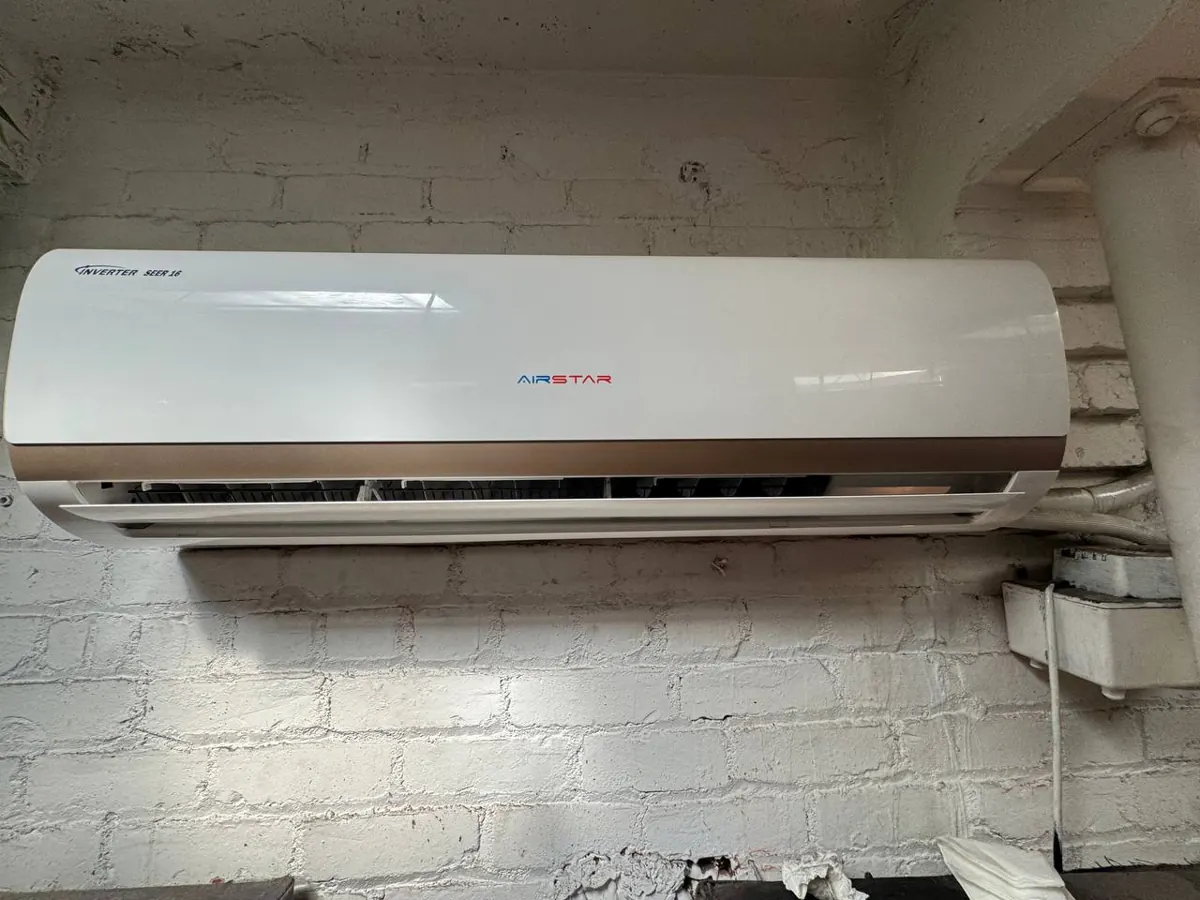
Mini-split maintenance: what is different
Ductless mini splits are everywhere in the Valley now, especially in older homes without ducts and in new ADUs. They are efficient and quiet, but they need a slightly different routine.
- Wash the indoor filters often. Most wall heads have washable mesh filters behind the front panel. Rinse them, let them dry fully and slide them back in. During heavy use, every couple of weeks is not too often.
- Watch for musty smells. The indoor coil and the long, barrel-shaped blower wheel inside the head can collect dust and grow mold, especially in bedrooms. That calls for a professional deep cleaning, which typically involves protecting the wall and rinsing the coil and blower wheel thoroughly.
- Look for drips. Water dripping from a wall head usually points to a clogged drain line, a failing condensate pump or a head that is not level.
- Inspect the line set. The insulation on the refrigerant lines can break down in Valley sun. Damaged insulation hurts efficiency and can cause condensation.
- Keep the outdoor unit clear, just like a central AC condenser.
Multi-zone systems have more heads, more drains and more places for problems to hide, so a yearly professional visit is a smart baseline.
Signs your AC needs service before the next scheduled visit
Do not wait for the calendar if you notice any of these:
- The air from the vents is not as cold as it used to be, or the system runs nonstop on a normal day.
- Ice on the refrigerant lines or the indoor coil.
- Buzzing, clicking or humming at the outdoor unit without the fan spinning.
- Water around the indoor unit or a ceiling stain below it.
- Short cycling, where the system turns on and off every few minutes.
- A burning or musty smell from the vents.
If your system is already struggling, our guide on why your AC is not cooling walks through the most common causes, and you can book AC repair if you need it fixed now.
Condos, rooftops and hillside homes
Not every system is a split unit beside the house. Many Valley condos have condensers on the roof or a balcony, and HOA rules may control access. Rooftop package units take the full force of the sun and collect more dust and debris. Hillside homes in Encino and Studio City often have long duct runs through hot attics or crawlspaces. In all of these cases, the DIY list shrinks and a professional visit matters more, since roof access and tight spaces are not places to improvise. Landlords should put every unit on a fixed maintenance calendar.
How Back2Cool handles AC maintenance
Back2Cool HVAC is based in Sherman Oaks and has served Los Angeles homes for 12 years, including Van Nuys, Encino, North Hollywood and the rest of the Valley. A maintenance visit follows the same process as any call: we listen to your concerns, inspect the system, look for root causes and explain what we found before any work beyond the visit is approved.
- We work on central AC, heat pumps, ductless mini splits (single and multi-zone), furnaces and rooftop units.
- Our lead tech has completed specialized training courses with Mitsubishi Electric, Daikin and Fujitsu.
- We recommend only the work needed to keep your system running safely and reliably. No upselling.
- Floors get covered, and we verify proper operation before we leave.
"If you need HVAC work done right in LA, call Back2Cool. We had an issue with our rooftop unit and they came out the same day. The tech was super knowledgeable he didn't just swap parts, he actually figured out why it broke and explained the whole thing to us so we'd know what to watch for next time. No upselling, no weird fees, just honest work at a fair price. It's rare to find that level of integrity these days. Definitely hiring them for our annual maintenance contract now. Highly recommended!"
Ashley S. · Thumbtack
Our $55 service call with code LA55 includes a system inspection, diagnosis and clear recommendations, and the $55 goes toward the repair if you move forward. We are open 7 days a week, 8:00 AM to 10:00 PM. Call (626) 635-4095 or request a visit online and get your system ready before the next heat wave.