If your AC is not cooling during a Los Angeles heat wave, start with the things you can check in ten minutes: the thermostat settings, the breakers, the air filter, the condensate float switch, and whether the outdoor unit's fan is actually spinning. Those five checks solve a surprising number of "no cooling" calls. If they all look fine and the house is still warm, the problem is most likely electrical (a capacitor or contactor), refrigerant-related, or the compressor itself, and that's when you need a technician.
Below are the 11 causes we see most often across Sherman Oaks, Van Nuys, Encino and the rest of the San Fernando Valley, split into what you can safely check and what you should leave to a pro. We'll also cover why even a healthy system struggles at 105°F and what to do to stay comfortable while you wait for help.
First: Is Your AC Broken or Just Overwhelmed?
Before you start troubleshooting, it helps to know what "not cooling" actually looks like. There's a big difference between an AC that blows warm air and one that blows cool air but can't get the house below 80°F on a 108°F afternoon.
Put your hand (or a cheap thermometer) at a supply vent near the indoor unit, then at the return grille. On a working system, the supply air should feel clearly colder, often somewhere around 15 to 20 degrees cooler than the return air. If it is, your AC is probably working and simply losing the battle against the heat. If the air coming out is barely cooler than the room, something is wrong.
Why AC Units Struggle When It's 105°F+ in the Valley
San Fernando Valley summers run much hotter than the coast. Triple-digit days are common from July through October, and Woodland Hills hit 121°F on September 6, 2020. That kind of heat pushes residential equipment to its limits for a few reasons.
Systems are sized for a design temperature, not the record high
A properly sized system is designed around a "design temperature" for your area, which is hot but not the hottest day on record. On days well above that number, a healthy AC can run continuously and the indoor temperature may creep a few degrees above the setpoint by late afternoon. That's expected. An undersized or poorly installed system will fall much further behind.
Attic ducts are cooking
Many LA homes, especially 1950s and 1960s ranch houses in Van Nuys, North Hollywood and Encino, have ductwork running through the attic. On a heat-wave afternoon that attic can get far hotter than the outdoor air. Cold air picks up heat on its way to the rooms, and any leaks in old ducts dump that cooled air into the attic or pull hot attic air into the system.
The outdoor unit can't reject heat fast enough
Your condenser works by dumping heat into the outside air. The hotter that air is, the harder the job gets. A dirty coil, a unit boxed in by plants or fencing, or a condenser sitting in full afternoon sun on a hot rooftop makes it even harder.
AC Not Cooling: 6 Things You Can Check Yourself
These checks are safe for any homeowner. Don't open electrical panels on the equipment, and don't touch anything inside the outdoor unit.
1. Thermostat settings and batteries
It sounds obvious, but it's the first thing we check. Make sure the thermostat is set to Cool, the setpoint is below the room temperature, and the fan is on Auto. If the display is blank or dim, replace the batteries. Smart thermostats sometimes lose Wi-Fi, revert to a schedule, or get stuck in an "eco" mode during utility demand events. If the thermostat itself seems unreliable, a repair visit can include testing or replacing it.
2. Tripped breaker or outdoor disconnect
Most central AC systems have two power sources: a breaker for the indoor furnace or air handler, and a separate double breaker for the outdoor unit. Check both in your main panel. Also check the outdoor disconnect box near the condenser; sometimes a gardener bumps it or someone pulls it during yard work. If a breaker trips again right after you reset it, stop and call a technician. Repeated tripping points to an electrical fault.
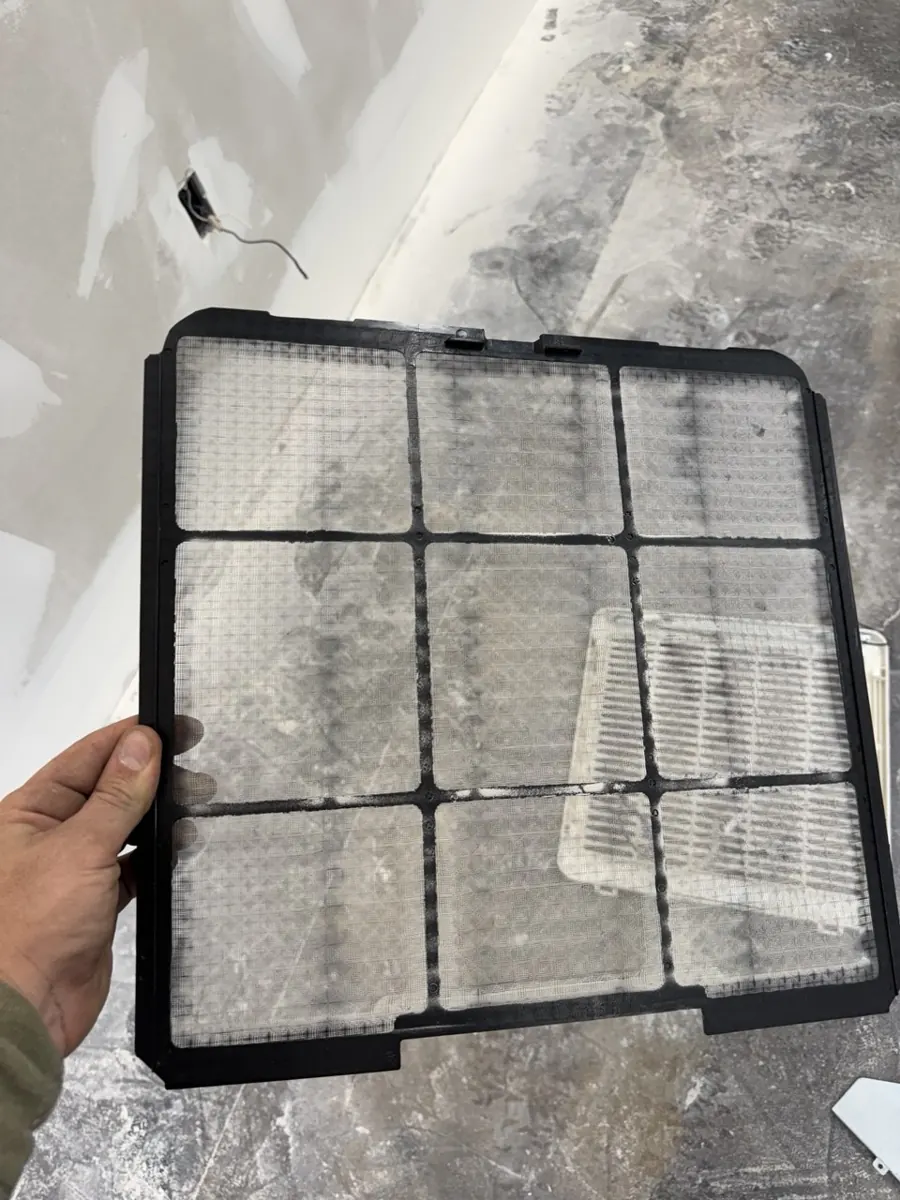
3. A clogged air filter
A dirty filter is the single most common cause of weak cooling we find. It chokes airflow across the indoor coil, which can make the coil freeze and the system blow warm. During heavy-use months, and especially after wildfire smoke events like the January 2025 fires, filters load up much faster than the package suggests. Pull it out and look: if you can't see light through it, replace it.
4. Condensate float switch tripped
Your AC removes moisture from the air, and that water drains through a condensate line. Many systems have a float switch in the drain pan or line that shuts the AC off if water backs up, which protects your ceiling from leaks. If your system shut off completely and you see water in the pan near the indoor unit, a clogged drain is the likely culprit. Some homeowners can clear the line with a wet/dry vac at the outdoor drain end; if you're not comfortable with that, it's a quick fix for a tech.
5. Outdoor unit dirty, blocked or not running
Go look at the condenser while the system is calling for cooling. You should hear the compressor humming and see the top fan spinning. Check for:
- Coil fins packed with dust, leaves, cottonwood fluff or dryer lint
- Shrubs, fences or stored items closer than about two feet from the sides
- A fan that isn't spinning while the unit hums (this points to cause #7 below)
With power turned off at the disconnect, you can gently rinse the coil from the outside with a garden hose. No pressure washers; they bend the fins.
6. Ice on the indoor coil or refrigerant lines
If you see frost or ice on the copper lines at the outdoor unit or on the indoor coil, turn the system to Off and the fan to On. Let it thaw completely, which can take several hours. Replace the filter while you wait. Ice is a symptom, not the root cause: it usually means restricted airflow or low refrigerant. If it freezes again after a restart with a clean filter, call for service.
- Thermostat on Cool, setpoint below room temperature, fresh batteries
- Indoor and outdoor breakers on, outdoor disconnect in place
- Filter clean (replace if in doubt)
- No water backed up in the condensate pan
- Outdoor fan spinning, coil clean, two feet of clearance
- No ice on the lines or coil
Want a pro to take a look?
$55 service call with code LA55 — inspection, diagnosis and a clear price before any work. Open 7 days · 8 AM – 10 PM.
5 AC Problems That Need a Technician
If the basic checks didn't fix it, the cause is usually one of these. All of them involve high voltage, stored electrical charge or pressurized refrigerant, so please don't DIY them.
7. Failed capacitor
The capacitor gives the compressor and outdoor fan motor the kick they need to start and keeps them running. Heat is hard on capacitors, which is why they're one of the most common failures we replace in LA summers. Classic symptoms: the outdoor unit hums but the fan doesn't spin, or the fan runs but the compressor won't start. A capacitor can hold a dangerous charge even with the power off.
8. Bad contactor
The contactor is the switch that sends power to the outdoor unit when the thermostat calls for cooling. Contacts can pit and burn over time, or ants and debris can get in and keep it from closing. When it fails, the indoor fan runs but the outdoor unit sits silent. When it sticks closed, the outdoor unit keeps running even with the thermostat off.
9. Refrigerant leak
An AC doesn't "use up" refrigerant. If it's low, there's a leak somewhere, often at a flare fitting, a service valve, or a corroded spot in the coil. Low charge shows up as weak cooling, long run times, ice on the lines and higher bills. The right fix is to find and repair the leak, then charge to the manufacturer's specification, not just top it off. If your system uses R-410A, it can still be serviced, but supply is being phased down; our guide on the R-410A phase-out and new A2L refrigerants explains what that means for repair decisions. And don't assume a leak means the system is old: rushed installations with poorly made flare connections can leak within the first couple of years.
10. Compressor problems
The compressor is the heart of the system. It can fail to start because of a bad capacitor or contactor (cheap fixes), overheat and cut out on its internal protection during extreme heat, or fail mechanically. A good tech rules out the simple electrical causes before ever calling a compressor dead. If it truly has failed on an older system, it's time to weigh repairing versus replacing your AC.
11. Duct leaks and airflow problems
Disconnected or crushed duct runs in the attic, a failing blower motor, or a dirty blower wheel can all leave some rooms hot while the system technically works. Torn flex duct is common in older Valley homes where ducts have been baking in attics for decades. If certain rooms never cool, it's worth having the ductwork inspected; our duct services cover cleaning, repair and replacement.
Quick Reference: Symptom vs. Likely Cause
| What you notice | Likely cause | DIY or tech? |
|---|---|---|
| Nothing turns on at all | Thermostat, breaker, float switch | Check yourself first |
| Indoor fan runs, outdoor unit silent | Breaker, disconnect, contactor, capacitor | Check breakers; then tech |
| Outdoor unit hums, fan not spinning | Capacitor or fan motor | Tech |
| Ice on lines or coil | Dirty filter, low refrigerant, airflow issue | Thaw and change filter; tech if it returns |
| Cool air, but house won't drop below 80°F at 105°F+ | Design-temperature limits, attic ducts, sizing | Usually normal; tech if it's getting worse |
| Some rooms hot, others fine | Duct leaks, dampers, blower | Tech |
| Water near the indoor unit | Clogged condensate drain | Possible DIY; tech if unsure |
What to Do While You Wait for an AC Repair
Heat waves are when every HVAC company in LA is busiest. Here's how to keep the house bearable until a tech arrives.
- Close blinds and curtains on south- and west-facing windows, especially from midday on.
- Run ceiling fans counterclockwise and use box fans to move air. Fans cool people, not rooms, so turn them off in empty rooms.
- Skip the oven, dryer and dishwasher during the afternoon.
- Don't keep restarting a system that's frozen or tripping breakers. You can turn a cheap repair into an expensive one.
- Set up a cool room. A window or portable unit in one bedroom can make a big difference overnight.
- Check on vulnerable people. Older relatives, infants and pets are most at risk. If the house is dangerously hot, go to a cooling center, library or mall until it's fixed.
Tip: If you can, send a photo of your outdoor unit's data plate and a short video of what it's doing when you call. It helps the tech arrive with the right parts, which can mean a one-visit fix instead of two.
How to Keep Your AC From Failing Next Heat Wave
Most of the failures above are heat-related, and many can be caught early. A spring AC tune-up lets a technician test capacitors before they fail, clean the outdoor coil, check refrigerant performance, clear the condensate drain and confirm airflow. Our San Fernando Valley maintenance guide walks through what a real tune-up should include.
Running smarter helps too. With LADWP and SCE time-of-use rates, pre-cooling the house in the late morning and letting the temperature drift up slightly during peak hours keeps the system from fighting the hottest part of the day from a standing start. See our tips on lowering your cooling bill with LADWP and SCE.
How Back2Cool Handles an AC That's Not Cooling
We're a local HVAC company based at 4851 Woodman Ave in Sherman Oaks, with 12 years in business and hours seven days a week from 8:00 AM to 10:00 PM. Same-day service is common during heat waves, though we never promise a specific response time.
- $55 service call with code LA55. It includes a system inspection, diagnosis of the issue and clear recommendations. The $55 is applied toward the repair if you go ahead.
- Root cause, not parts swapping. We listen to what's happening, inspect, find the actual cause, explain your options and give clear pricing before any approved work.
- Only what's necessary. We recommend the work needed to restore safe, reliable operation. No upselling.
- Verified before we leave. We check that the system is cooling properly before we pack up.
"AC died on me in the middle of that heat wave... called these guys in the morning and someone was out by the afternoon. The tech was super nice, showed me what the problem was and didn't try to upsell me on a whole new unit like the last company did. Fixed it in about an hour, and the price was reasonable. House is finally cool again lol. Will def use them again!!"
Danny G. · Thumbtack
We serve Sherman Oaks, Van Nuys, Encino, North Hollywood and the rest of our Los Angeles service area. If your AC is not cooling, call (626) 635-4095 or book an AC repair visit.